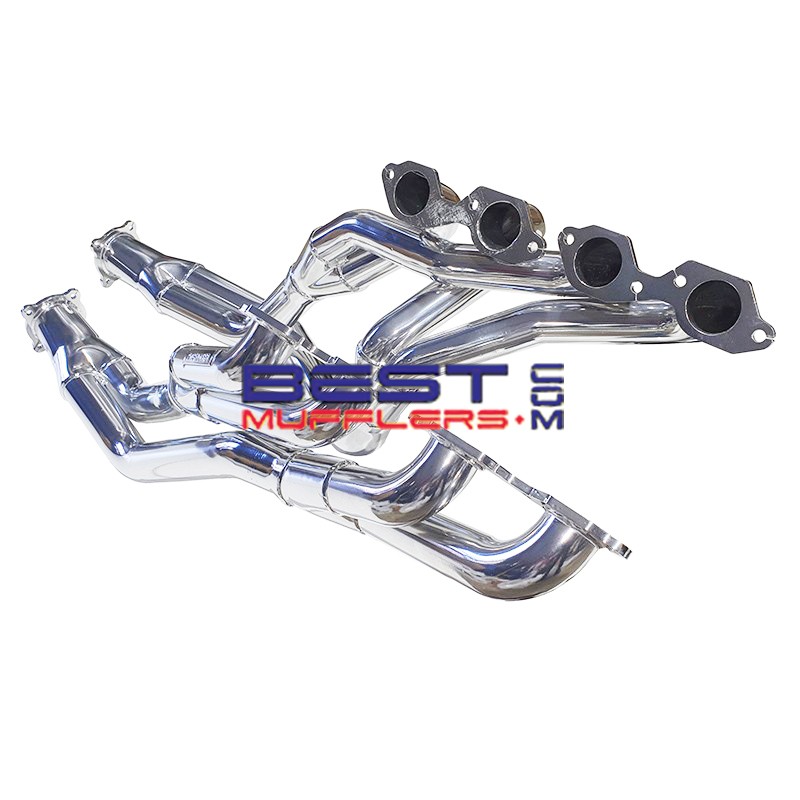
Pacemaker PHC65 ceramic coating is available for selected Pacemaker headers and is designed to improve heat management, corrosion resistance and long-term durability while providing a premium ceramic-coated finish.
The ceramic coating is applied to both the inside and outside surfaces of the headers, helping reduce radiant heat around the engine bay while also providing additional protection against internal exhaust corrosion.
Processing time is approximately 14–21 days.
Best Mufflers provides expert advice and fast shipping Australia-wide.
Pacemaker PHC65 ceramic coating is a premium coating option available for selected Pacemaker headers. It is designed to improve heat management, corrosion resistance and durability while giving the headers a clean, professional ceramic finish.
Unlike an external-only coating, the Pacemaker ceramic coating process treats both the inside and outside of the header pipes. This helps reduce heat transfer into the engine bay while also providing additional protection against corrosion caused by hot exhaust gases inside the headers.
Allow approximately 14–21 days for the ceramic coating process.
This PHC65 ceramic coating listing is only for specific Pacemaker headers.
Please do not purchase this coating option unless PHC65 is specifically listed against the Pacemaker headers you are ordering or Best Mufflers has confirmed that PHC65 is the correct coating option for your application.
Testing supplied for ceramic-coated headers shows a substantial reduction in radiated heat compared with uncoated headers.
| Exhaust Gas Temp | Header Surface Temp | Radiated Heat Uncoated | Radiated Heat Coated | Reduction |
| 1330°F | 810°F | 170°F | 60°F | 110°F |
| 1340°F | 810°F | 170°F | 60°F | 110°F |
| 1350°F | 820°F | 180°F | 70°F | 110°F |
| 1380°F | 830°F | 180°F | 70°F | 110°F |
| 1410°F | 840°F | 180°F | 70°F | 110°F |
| 1420°F | 840°F | 180°F | 70°F | 110°F |
| 1440°F | 860°F | 190°F | 70°F | 120°F |
| 1510°F | 890°F | 190°F | 70°F | 120°F |
| 1530°F | 930°F | 200°F | 80°F | 120°F |
The temperature figures above are supplied test data and should be used as a guide only. Actual temperatures will vary depending on engine load, exhaust gas temperature, vehicle configuration, airflow and operating conditions.
Header wrap can also reduce radiant heat, but ceramic coating provides the additional benefit of coating the internal exhaust surface. Hot exhaust gases and condensation can contribute to corrosion from inside the header pipes, so internal ceramic protection can provide an advantage over external wrap alone.
Care should be taken during installation to avoid scratching or damaging the ceramic coating.
A useful installation method is to wrap the headers in several layers of cling film before placing them into the engine bay. Trim the wrap away from the cylinder-head flange so the mounting bolts can be started, then carefully cut and remove the remaining film before final tightening.
Avoid dragging ceramic-coated headers against chassis rails, steering components, engine mounts or bodywork during installation.
What does PHC65mean?
PHC65 is a Pacemaker ceramic coating option used for selected Pacemaker header applications.
Does ceramic coating reduce engine bay heat?
Yes. Ceramic coating can significantly reduce radiant heat from the header surface. Actual temperature reduction varies depending on engine and operating conditions.
Are the headers coated internally as well as externally?
Yes. The ceramic coating process treats both the internal and external surfaces of the applicable header pipes.
How long does ceramic coating take?
Allow approximately 14–21 days for the coating process.
Can I add PHC65 to any Pacemaker headers?
No. PHC65 applies only to specific Pacemaker header sets. It should only be selected where PHC65 is listed against the header part number or confirmed by Best Mufflers.
Can I pick up from the store?
Yes. Pick up is available but must be pre-arranged before collection.
How much is freight?
Freight varies depending on your delivery location and where stock is available. Please contact us for freight charges before ordering. Where possible, we can arrange dispatch from the nearest available product location to help reduce freight costs and delivery times.
For phone orders, advice, or part enquiries – contact us:
📞 Call Now: +61 2 9547 3511 ✉️ Email Us
🇦🇺 Best Mufflers
87A Planthurst Road, Carlton NSW 2218, Australia
Exhaust Systems Since 1983
Workshop hours: Mon–Fri 8:00am–5:00pm (By Appointment Only) | Phone and email enquiries welcome 24 hours

You might also like
Pacemaker PHC65 ceramic coating is available for selected Pacemaker headers and is designed to improve heat management, corrosion resistance and long-term durability while providing a premium ceramic-coated finish.
The ceramic coating is applied to both the inside and outside surfaces of the headers, helping reduce radiant heat around the engine bay while also providing additional protection against internal exhaust corrosion.
Processing time is approximately 14–21 days.
Best Mufflers provides expert advice and fast shipping Australia-wide.